In this article
- Your first class
- Origins and community
- Movement to notice
- Listen to the music
- Choosing a class
- Approaches and next steps
Discover your style
Zumba is an energetic group workout set to rhythms from salsa, merengue, cumbia, reggaeton, and other music traditions. Its promise is simple: move before you start judging yourself.
01
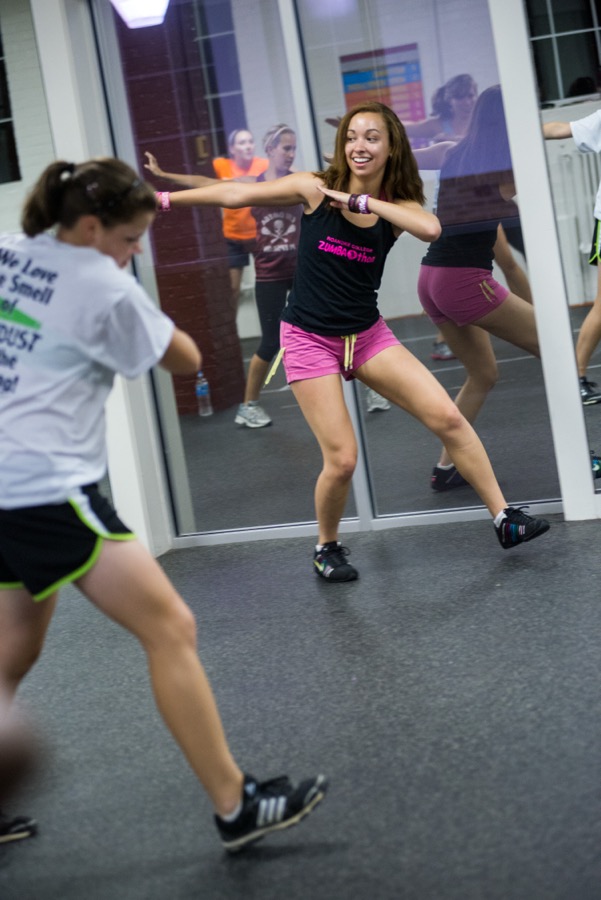
The instructor gives short movement cues as the first song starts. Follow one basic step; it becomes easier to recognise when the chorus returns. Move with the music and learn the sequence a little at a time.
A good teacher gives clear cues before a change of direction or movement. If the room falls behind, they simplify the choreography in the moment. That ability to read the room often decides whether a first class feels fun.
Choose a class where you can slow down and pause for water. Wear comfortable shoes, bring water, and use a smaller range of motion when you need it.
Each track can bring a different rhythm. Hear the pulse change and watch for the instructor's cue before a new sequence. Once the step feels familiar, add the arms or a larger range of movement.
02
Zumba’s account of its origins traces the programme to Alberto Perez’s classes in 1990s Colombia. The branded format later spread through an instructor network. A class can use several rhythms, each with its own musical history.
Ask which songs the instructor uses in your group and whether they offer lower-intensity movement. The official music and choreography page shows how the programme combines dance with a fitness-class structure.
Zumba combines group choreography with several music rhythms. If a rhythm interests you, explore its technique and tradition in a class dedicated to that dance.
The official Music & Choreo page describes both music made for the programme and licensed tracks by other artists. This material is for instructors; ask your teacher about the playlist used in your group.
Choose a local Zumba class by its current studio schedule, location, and intensity. Check the time and available places with the studio before you register.
Ask the instructor which songs the group will use this month. When a rhythm catches your ear, hear the music outside the fitness room too. One track may lead you to a separate salsa, bachata or other dance class.
03
A hand, glance, or body direction tells you what comes next. A useful cue arrives before the move. If you keep guessing, ask the teacher for a clearer cue before each change.
Song sections often return with the same movement block. Watch the first time, join the second, and enjoy the third. This repetition lets you learn without long stops.
The same step can use a jump or stay grounded, travel widely or remain small. A teacher should show options. Choose a range of motion that suits you.
Watch Mauricio Camargo’s repeated steps and cues before a change of direction.
Zumba · Mauricio Camargo · 2022Open the original source ↗04
The instructor chooses the music. Zumba makes original tracks and licenses other artists’ music for ZIN members. Ask your instructor which rhythms you will hear and how the intensity changes.
The programme’s official 2011 music video. Compare repeated musical sections with group movement. Ask your teacher about the current local playlist.
Zumba FitnessOpen the track ↗05
06
These approaches differ in movement, music and class format. Ask the teacher which one the group follows.
Many songs, few stops, and a strong group feeling. It suits people who want to move to music and enjoy short, repeated sequences.
The teacher may stress heart rate, stamina, and a larger range. Ask about no-jump options and rest if you need less impact on your joints.
A reggaeton class usually explores one music and movement field in more depth. Zumba may use one reggaeton track, then move straight to another rhythm.
A Latin-dance class usually teaches one form's technique, rhythm, or partner work. Zumba combines movements inspired by these rhythms in a fitness format.
Teaches in: Vilnius
Dancefit founder and Zumba instructor since 2011; she also teaches Pilates and personal training.
Teaches in: Vilnius
A Zumba, Zumba Kids and Pilates instructor, personal trainer, and Dancefit administrator with more than 10 years of dance and fitness experience.
Teaches in: Kaunas