In this article
- Your first class
- Origins and community
- Movement to notice
- Listen to the music
- Choosing a class
- Approaches and next steps
Discover your style
Vogue grew in New York ballroom. Poses, walks and performances belong to events and houses built by Black, Latino, queer and trans communities.
01
A first class may separate Old Way, New Way, and Vogue Femme or focus on one line. Ask which lineage you are learning and who passed it to the teacher.
Dips require technique, strength, and a safe landing. Learn them gradually after preparing your knees, hips, and back.
Ask which vogue approach the teacher will cover today. One class may explore lines and poses, another hand work or Vogue Femme elements. Begin with a clear walk and stop before joining several categories.
02
Ballroom history is tied to Harlem and New York, racist beauty-pageant judging, and houses that became chosen families. Crystal LaBeija's story helps explain why such a space was necessary.
Willi Ninja helped vogue reach wider stages. Classes in Paris and Vilnius can trace their practice to New York ballroom people and culture.
The Smithsonian history of voguing connects the dance to New York ballroom houses, Black and Latino LGBTQ+ people and their events. That context gives a pose a place within a community story.
A ball brings together competition, fashion, and community. Categories cover fashion, body, realness, performance, and community status. The MC, DJ, judges, houses, and audience build the night together.
The Latex Ball shows competition joined with community care through vogue, fashion, and sexual-health messages. It explains why vogue grew through the lives of its community.
At a ball, watch more than the dancer on the floor. The MC, DJ, judges, houses and audience build the night together. One category may foreground a walk, another fashion or performance energy. Ask which categories your class studies.
03
Notice how arms, walk and pose answer a particular category and its music.
A House of Ninja dancer speaks about community; listen to their account of the community and watch their movement.
Funk'd Up TVOpen the original source ↗Watch the ball categories and how different participants use walk, arms and pose.
Paris Ballroom TVOpen the original source ↗This 2019 Latex Ball category shows voguing inside a specific community format.
Ballroom Throwbacks TelevisionOpen the original source ↗04
Ballroom music supports a category’s walk and poses. Notice how a performer answers the commentator’s voice.
05
06
Waacking grew in Los Angeles clubs and uses rotational arms and disco drama. Vogue has a different ballroom history, categories, and movement lines.
Here ballroom means Black and Latino queer ball culture, not standard partner-dance competition. The catalogue must keep these meanings clearly separate.
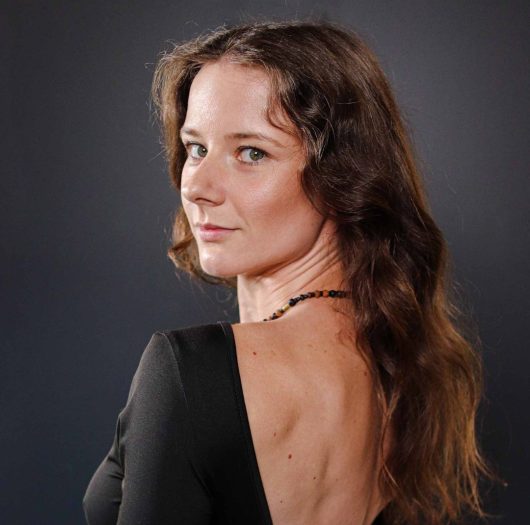
Teaches in: Vilnius
Dajana teaches Vogue and has built a Vogue Ballroom community in Lithuania since 2020.