In this article
- Your first class
- Origins and community
- Movement to notice
- Listen to the music
- Choosing a class
- Approaches and next steps
Discover your style
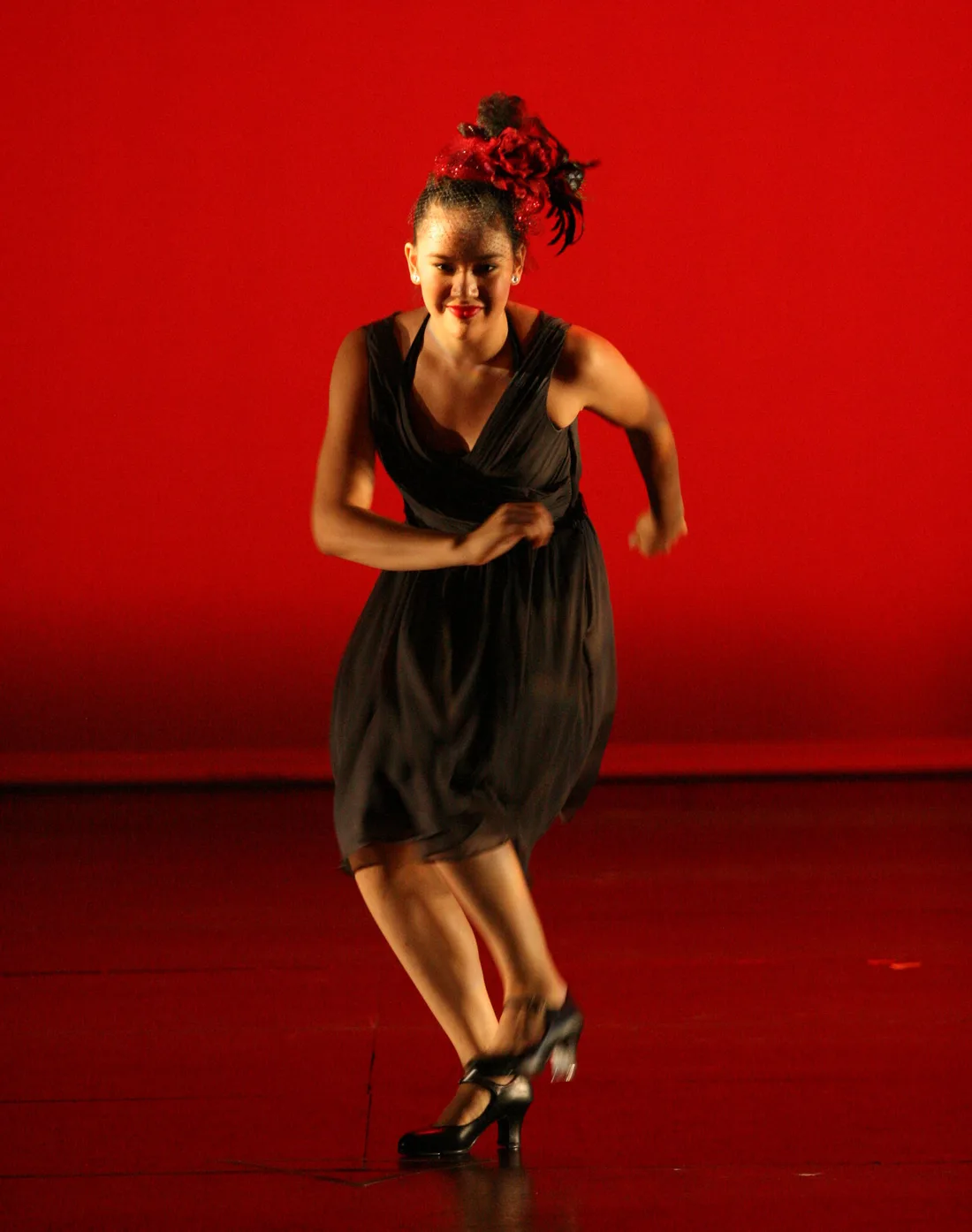
A tap dancer is also a musician: heel, toe, and floor become an instrument. Even without melody, they can make a phrase, a question, an answer, and deliberate silence.
01
Start with heels, shuffles, flaps, and brushes. Keep ankles loose, knees soft, and weight transfers clear; otherwise the foot will try to force sound.
Drill one rhythm slowly before adding tempo. A teacher prevents habits that become hard to undo, especially tense ankles and incomplete weight transfers.
Learn one short sound phrase without music: heel, toe, pause. Then listen for where it fits in a jazz recording. The teacher may ask you to answer another student's rhythm, so you can hear when your feet speak clearly.
02
Tap carries Black American rhythm, US stage, and film history. Bill ‘Bojangles’ Robinson and John Bubbles open some lines; Eleanor Powell and Fred Astaire show other stage and film forms.
Alongside the polished film images, learn about Black rhythmic authorship and the racial inequality dancers faced on stage.
The Smithsonian History of Tap film collection includes performances by Bill Robinson and John Bubbles. Compare how each dancer shapes sound, silence and contact with an audience.
Hear jazz and swing, clap a rhythm, then answer with your feet. Learning becomes richer when a combination becomes a musical thought with a beginning and end.
Try a short rhythmic dialogue with another dancer. One begins with three sounds; the other answers with a changed accent. This game shows how tap can become music made in the moment.
03
Listen to the heel and toe sounds: a clear heel or toe sound can carry a whole phrase.
Shelby Kaufman breaks down tap sounds and rhythm in a Broadway Dance Center class.
Shelby Kaufman · Broadway Dance CenterOpen the original source ↗04
Tap sound is part of the music. Hear a question and answer from the feet even when the backing track falls silent.
05
06
Solo Jazz interprets rhythm without metal plates. Tap feet create an audible percussion layer, so sound quality becomes part of technique.
Show Dance may use tap as a stage effect, but Tap has its own history of rhythm, improvisation, jams, and musicianship.

Teaches in: Vilnius
A What a Jazz co-founder, teacher and choreographer; her teaching values play, improvisation, individuality and swing dance history.