In this article
- Your first Brazilian Zouk class
- From Lambada to Brazilian Zouk
- Connection, direction and the wave
- The music you may hear
- Choosing a class and teacher
- Different paths through the dance
Discover your style
Brazilian Zouk asks partners to listen through movement: direction begins in the feet, travels through the body, and sometimes opens into a broad wave. Follow its Lambada roots, then begin with a simple step.
01
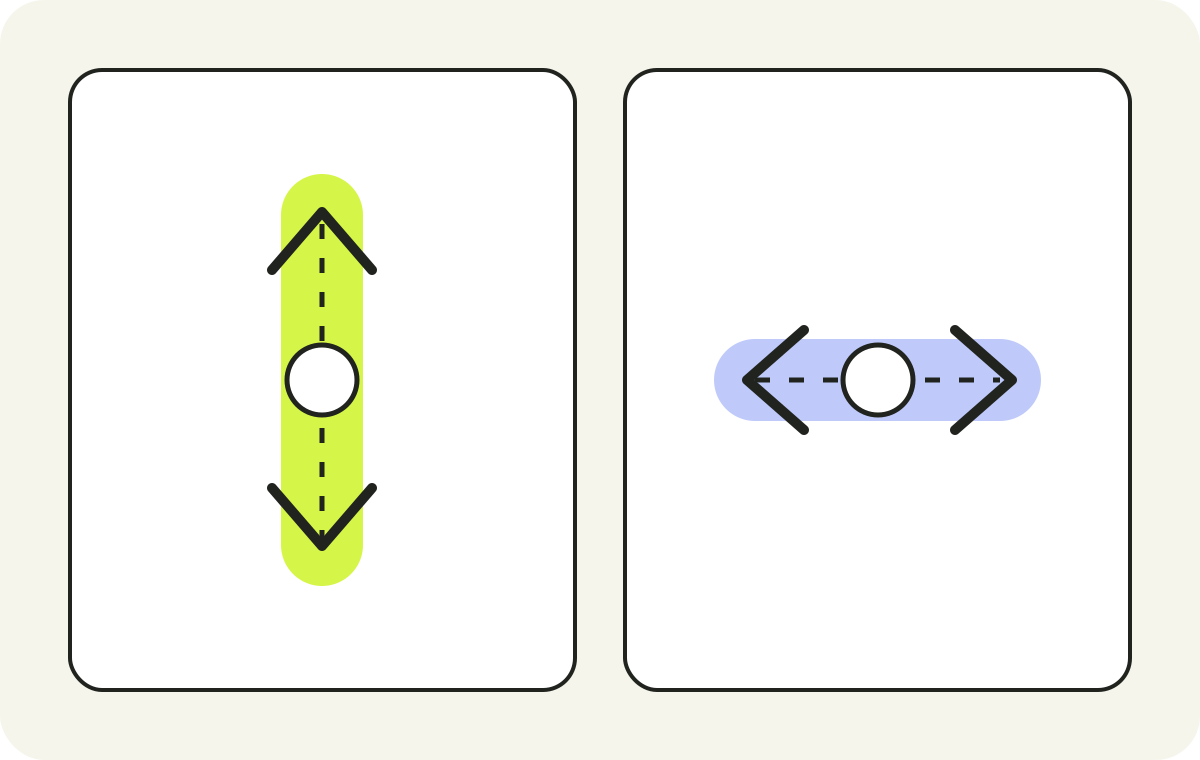
The Brazilian Zouk Dance Council movement list names forward-and-back and side steps. Try those directions to feel the pulse, and ask the teacher to show a comfortable range of movement.
In a pair, feel how a small change of direction travels through the arms and torso. One person offers a path and the other responds actively; either can ask for a slower pace or more space. Repeat a few plain steps before adding figures, and notice how the same pulse feels with different partners.
Ask to begin with small steps and clear partner connection. When the teacher demonstrates head movement or broad waves, watch how the dancers agree on their range. If a movement feels uncomfortable, stop and tell the teacher. You can spend this first evening getting to know the pulse and your balance.
02
The Brazilian Zouk Dance Council traces how Lambada dancers in early-1990s Brazil began adapting familiar partner movement to slower Caribbean zouk music. Connection, embrace and phrasing changed with the sound. It names Rio teachers Renata Peçanha and Adílio Porto among the people who shaped that transition.
The name has a history of its own. Dancers used ‘zouk’ even though the word already named Caribbean music and dance. A 2006 decision at the Minas Zouk Congress helped establish ‘Brazilian Zouk’ for the Brazilian partner form and distinguish it from the music that inspired it.
This history has more than one narrator. A 2023 peer-reviewed Brazilian study examines debates over origins, basic movements and competitions. Those accounts describe a living community whose teachers, musicians and dancers keep shaping the form in their own cities.
At Brazilian Zouk socials, musical response matters. One pair may choose small steps while another holds a pause; both can answer the same song. Watch how people invite a partner, agree on distance and close a dance. This social language can make a new room feel easier to enter.
Caribbean zouk is one musical root of the dance. A festival DJ may now choose another rhythm or a remix. The Council's historical account also names Samba-Reggae among its musical connections. Ask a teacher which sound guides the group you want to join.
03
Finish the weight transfer before changing direction. Try a plain forward, back and side step, as listed in the BZDC movement guide.
Watch one dancer suggest a new direction and the other answer it. Ask the teacher to show this change with a small step.
Watch where a dancer's body movement begins and ends. First recognise the wave in a video, then explore a larger range with a teacher.
Watch Adílio and Renata change direction and pause together. The BZDC features this performance on its dance-history page.
Adilio Porto · BZDC history pageOpen the original source ↗04
Start with a Caribbean zouk recording linked to the dance's name. Hear the steady pulse and the end of each vocal phrase; those moments give a pair room to pause or change direction.
A Caribbean zouk reference. Hear the steady pulse and the ends of vocal phrases; Brazilian dancers adapted Lambada movement to music like this.
05
06
These approaches differ in movement, music and class format. Ask the teacher which one the group follows.
Small steps and clear connection let partners answer each phrase. Start with the musical conversation; add figures later.
Stage work may use larger movement and set choreography. The academic study examines how competitions shape the dance's development.
Brazilian Zouk has Lambada roots and its own partner technique. BachaZouk is a young fusion format that deliberately mixes Zouk and Bachata elements.
Teaches in: Kaunas