
In this article
- Several histories meet
- Support, spins and transitions
- Music changes with the class aim
- How to choose a first class
- What class names mean
- What to ask before booking
Discover your style
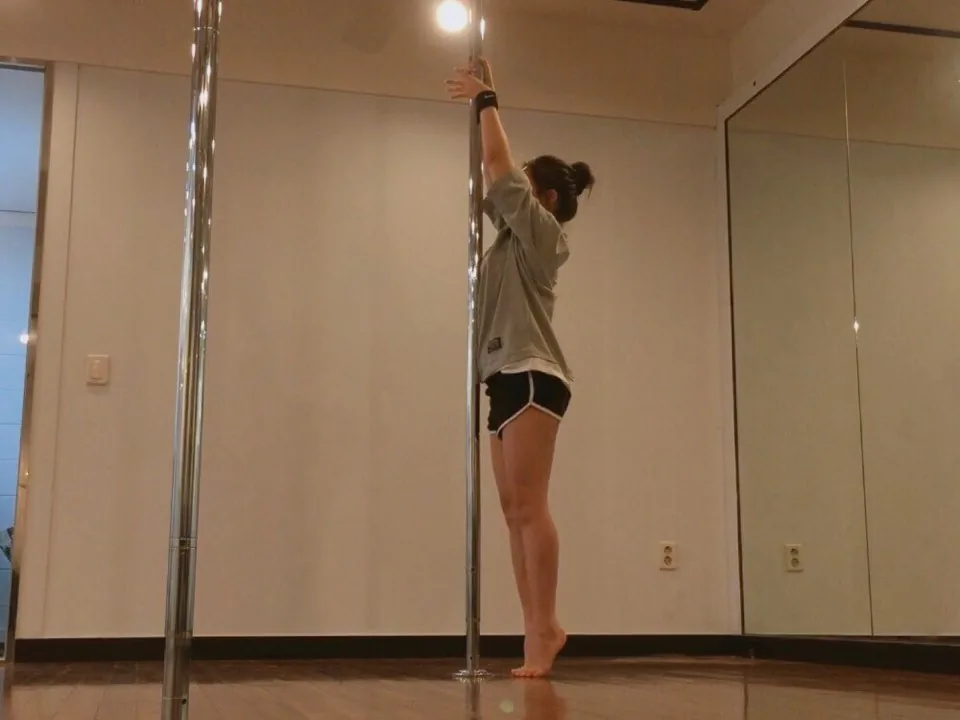
Pole Dance combines movement around a vertical pole with strength and musical expression. One class may focus on spins and holds; another may explore choreography, floorwork or competition training.
01
Modern Pole Dance has parallel histories in adult entertainment, studio exercise and personal expression. By 2009, studio participants were using the language of exercise and empowerment to redefine pole practice.
By 2015, Pole Dance was documented as a leisure practice in Denmark. Fitness, technique and dance expression met in studio classes, while stage and competition forms developed alongside them.
By 2018, adult entertainment, art, fitness and sport were coexisting Pole Dance fields. Current studios draw different movement and presentation priorities from these fields.
Mallakhamb is an Indian physical practice with its own documented history and teaching setting.
Competition systems formalise different priorities. IPSF Pole Sports emphasises athleticism and technical scoring; Artistic Pole gives more weight to interpretation, choreography and musicality.
In a studio, the pole can support a spin, pose or transition, while music shapes timing and movement quality. Body & Pole combines spins with dance movement, floorwork and conditioning.
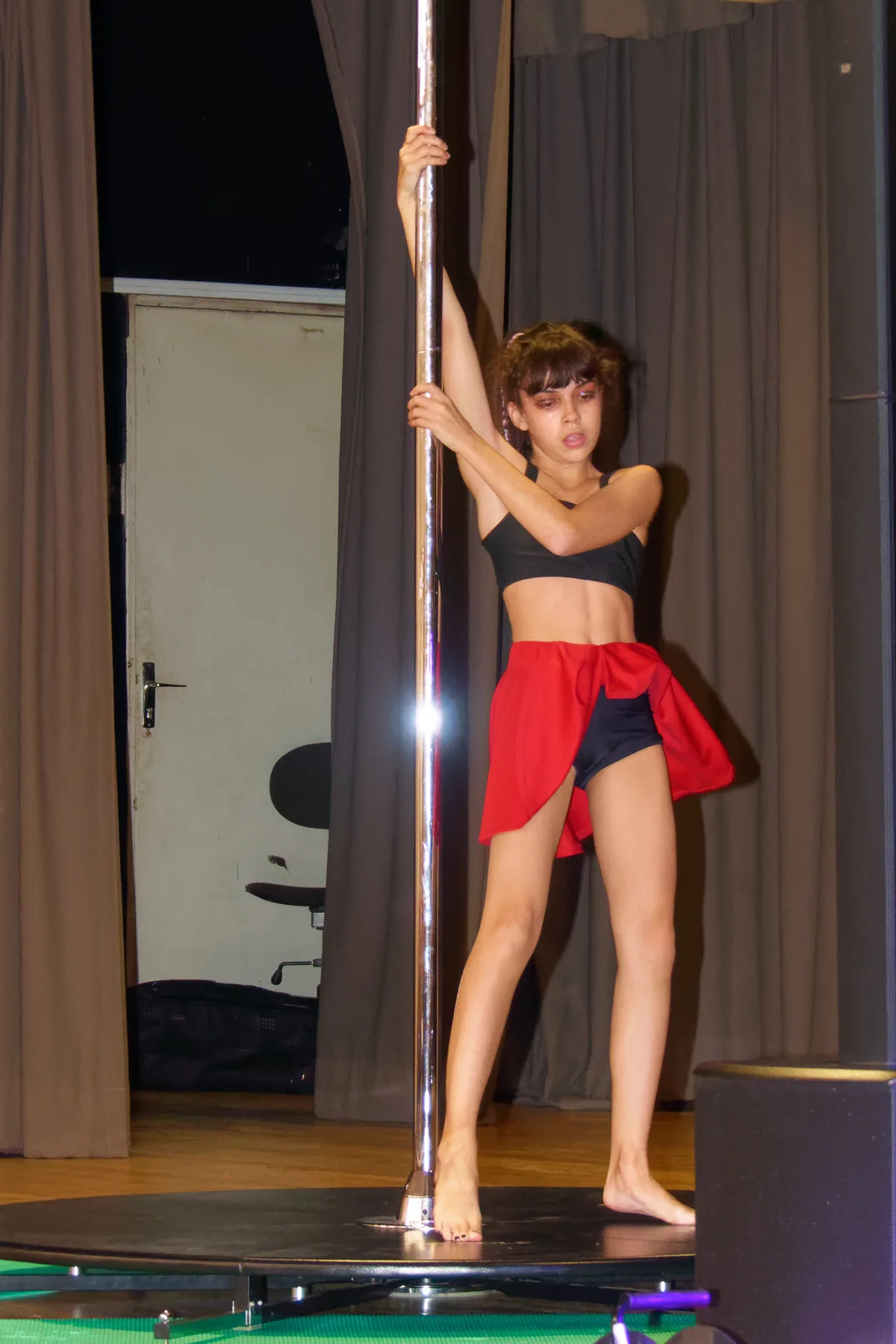
On stage, technical movement becomes part of a performance. This Pole Dance scene was photographed at a 2025 civic event in Bavilliers.
Exotic categories also vary. For its own events, Pole Sport Organization describes sensual movement, body waves and floorwork; heels are welcome there but optional.
Lithuanian studio timetables may use names such as Pole Fitness, Pole Mix or Pole Exotic. These describe a particular provider’s offer. Read the class description and ask about its focus before registering.
02
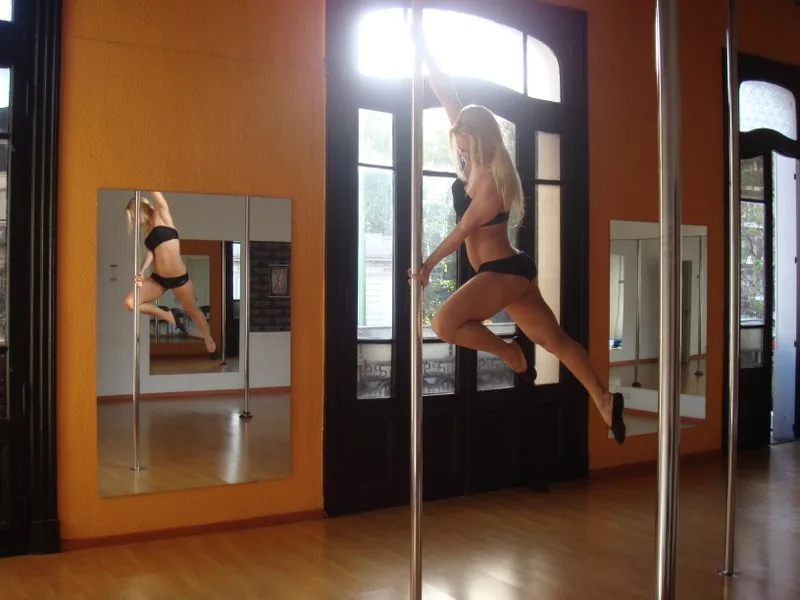
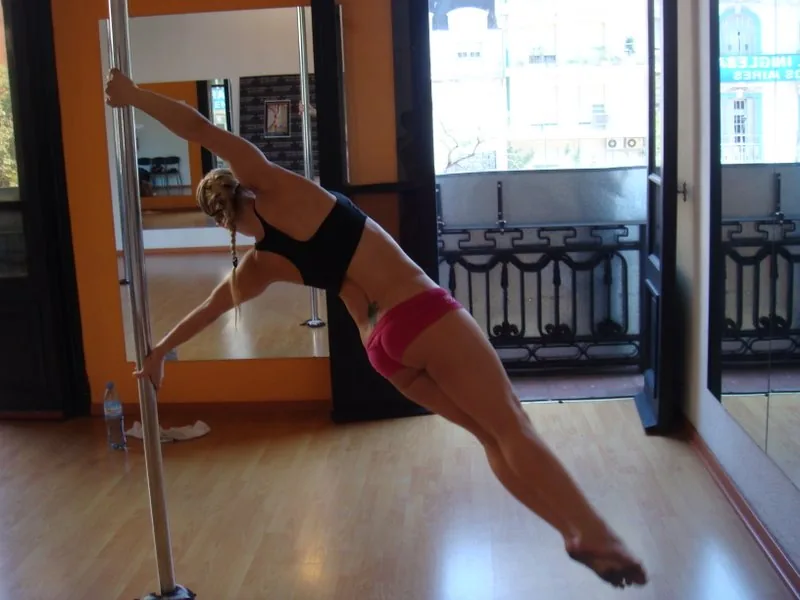
Hand grip, shoulder position and distance from the pole change the support. A teacher can show how to transfer weight before adding a spin or climb.
A bent-leg shape around the pole changes the support points and body position. In class, the movement includes an entry, a controlled position and an exit.
A low sideways shape shows movement extending away from the pole. Notice the support points and body line, then learn it through a teacher-led progression.
Transitions connect a spin, step, floorwork or pose. Artistic Pole explicitly treats choreography and musicality as performance elements.
In SarahPolerBeara’s 2026 beginner tutorial, watch the hand placement and leg swing at 0:57, the front-hook position at 3:34 and the body-line correction at 4:21. Duration: 6:23.
SarahPolerBeara · YouTubeOpen the original source ↗03
Pole Dance has no required music genre. The class aim often guides the choice: a clear pulse can support technique drills, while choreography may follow phrases, dynamics and pauses.
04
Choose a class clearly marked as introductory or beginner. Pole Fitness Studio and AERO Space offer such classes to people with no previous pole experience.
Early classes can include basic spins, steps, holds and conditioning. The pace depends on the group. Ask how the teacher breaks a movement into small actions and which easier options they offer.
Check clothing with the studio. One beginner programme recommends shorts and a tank so skin can grip the pole. Your class may give a different clothing list.
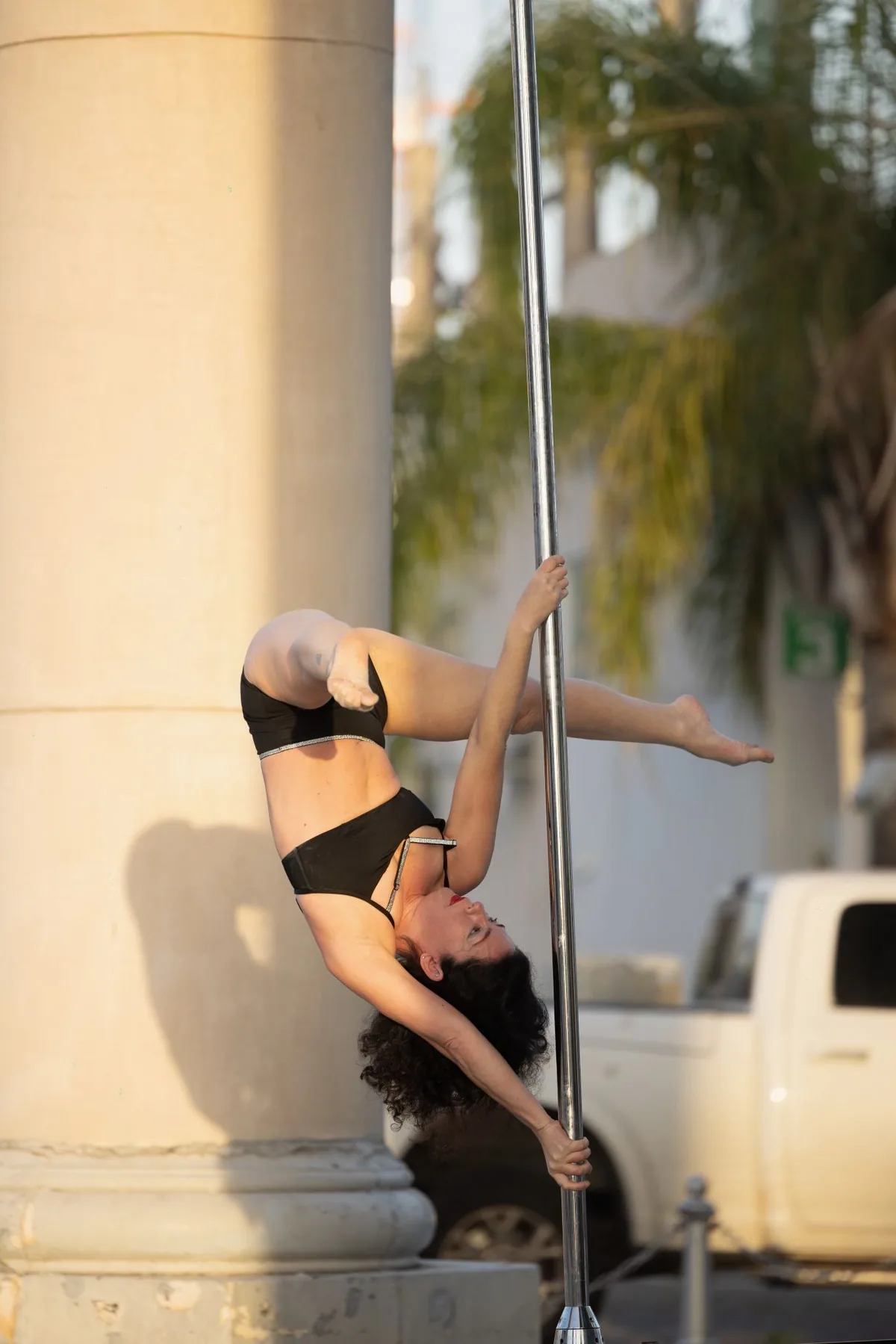
Ayesha is an advanced inverted shape for later progression. In a first class, the teacher will select basic supports and spins for the group level.
05
A broad name for classes that combine pole work with dance movement. The individual class description tells you the exact focus.
Studios may use these names for a training emphasis or mixed class. They are class labels, so check the provider’s timetable for the actual content.
Exotic is a Pole Dance variant, while event categories differ. PSO’s example includes sensual movement, body waves and floorwork, with heels optional.
The IPSF competition discipline uses technical scoring and athletic merit under a Code of Points. A beginner studio class may have a different aim.
A competition discipline that gives more weight to interpretation, choreography and musicality. Each organiser’s rules define the scoring criteria.
Floorwork can be one element of Pole Dance choreography and also stands as a movement practice used across many dances.
Gymnastics also develops strength, flexibility and body control. Pole Dance adds the pole, transitions and, depending on the class, musical interpretation.
06