In this article
- Your first class
- Origins and community
- Movement to notice
- Listen to the music
- Choosing a class
- Approaches and next steps
Discover your style
Bachata began as working-class Dominican music that higher social circles once dismissed. Today its guitars, closeness, and playful partner conversation fill dance floors around the world.
01
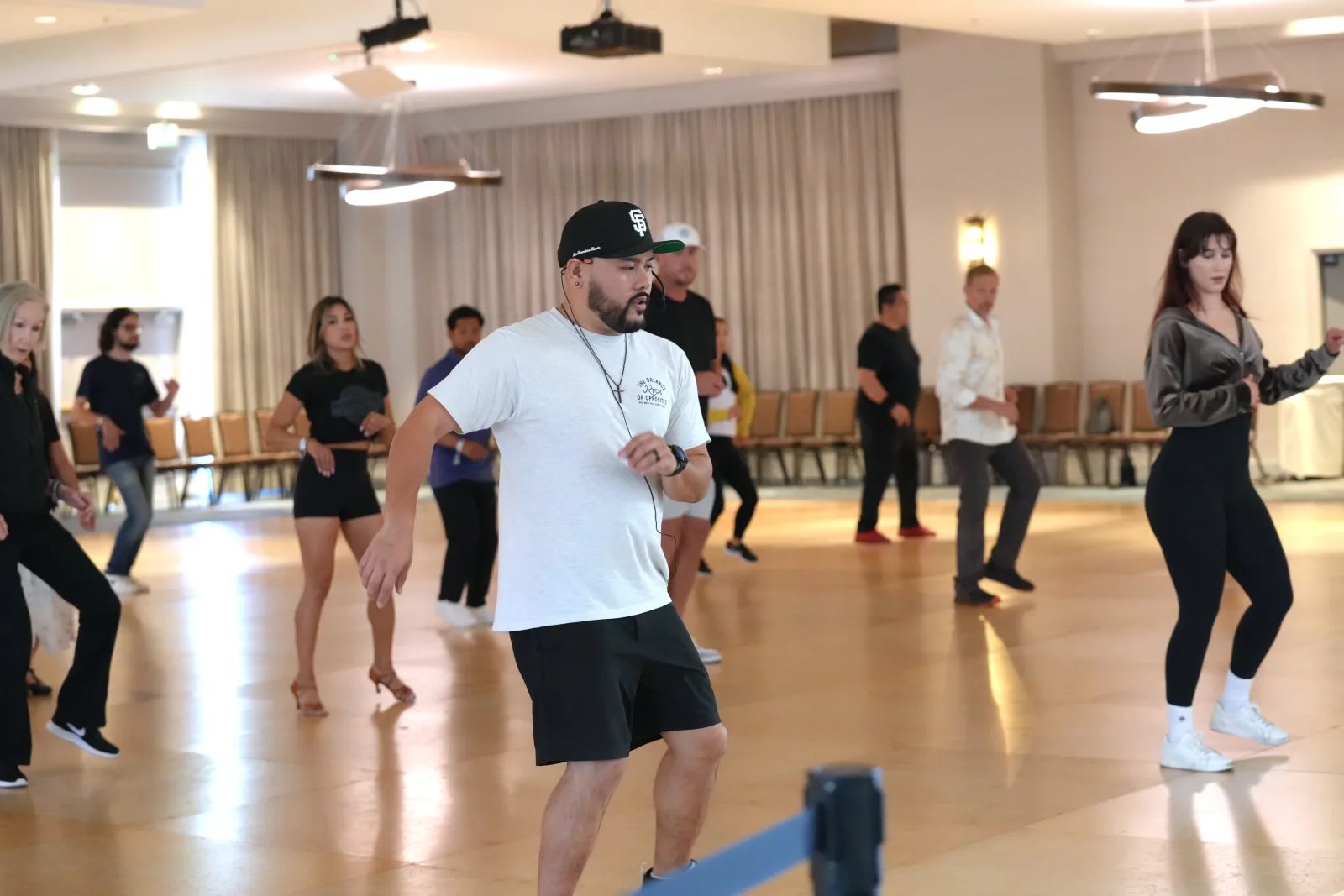
The first time the guitar kicks in, your feet may want to move faster than your brain. A teacher gives you a simple side step, and minutes later you are turning it into a small conversation for two.
Many social-dance classes welcome people who come alone, though each studio sets its own rules. If partners rotate, you will feel how the same step changes with each person in the room.
A good beginner class starts with rhythm, safe weight transfer, and clear connection. Explore closeness, turns, and styling when both partners feel ready.
Hear the same song twice: follow the guitar first, then the güira pulse. Try a basic step and a small pause before the next phrase. This exercise helps you choose movement from the music and adapt a memorised sequence.
02
Bachata emerged in the Dominican Republic in the 1960s. Guitar-led songs carried stories of heartbreak, drinking, jealousy, and ordinary life while people danced in courtyards, bars, and family gatherings.
For years it was disreputable music. Radio preferred merengue and salsa, while middle- and upper-class listeners called bachata vulgar. Musicians built their own recording and distribution world because the mainstream shut them out.
Migration, cassettes, Dominican communities in New York, and artists such as Juan Luis Guerra changed that status. The success of his Bachata Rosa era carried the music into rooms where earlier bachata had not been welcome.
Later, Aventura, Romeo Santos, Monchy & Alexandra, and Prince Royce brought bachata to new diaspora and global audiences. As the music travelled, its sound changed—and so did the ways people danced to it.
The UNESCO bachata account describes a Dominican tradition of music and partner dance. Musicians, couples and community gatherings all take part. Newer studio techniques build on this musical base, even when a class chooses a different recording or movement form.
Before it named a genre, “bachata” referred to a lively gathering. The dance grew at gatherings where people shared music, flirtation, humour, and stories from daily life.
The guitar often tells the melodic story, the güira draws a steady metallic pulse, bongos answer, and the bass holds the floor. Once you hear those layers, the steps stop feeling like a count sequence.
A modern class may use Dominican guitar bachata, New York urban bachata, a pop remix, or a slower sensual track. Ask which bachata approach the teacher teaches.
At a social, notice how a pair agrees on distance. Some prefer a closer dance; others want more room. A small step can express the music too, and both dancers shape the whole exchange.
03
Three steps and an accent fill one side of the phrase, then the direction changes. Feel how your weight travels through each step.
The hip responds naturally to the step and weight change. If you have to force it, you may have missed the more important part: support and timing.
Partners share timing, direction, and gentle tone through their movement. Agree clearly before moving closer.
See bachata in its social and cultural setting.
© Centro León, 2018 · UNESCOOpen the original source ↗04
For historical listening: notice the compact arrangement, voice, and role of the guitar.
A polished studio example: compare the instrumental layers and four-beat pulse.
A later, highly produced example. Listen for what remains recognizable as the arrangement changes.
Two voices turn the song into an argument. Hear how vocal dialogue can inspire replies, pauses, and playful tension between partners.
A smooth modern sound where bachata rhythm meets pop production. Compare it with the rougher, guitar-led recordings earlier in the list.
05
06
These approaches differ in movement, music and class format. Ask the teacher which one the group follows.
Closest to the dance's roots: playful footwork, syncopation, improvisation, and a close relationship with guitar and percussion. Partners may dance in an open or close hold.
An international studio approach that often joins a side basic with salsa-inspired turns and clear partner patterns. For many learners, it is an accessible route onto the social floor.
Developed in Spain, this approach uses body waves, isolations, and slower musical interpretation. It calls for precise leading, body control, and both partners’ consent to move closer.
A solo class for arm lines, footwork, body movement, and musicality. Learn leading and following separately for partner dancing, and explore the music's Dominican roots.
Salsa is also social and partnered, but its music, timing, and turn structure differ. If bachata feels like an intimate guitar conversation, salsa often feels brighter and more driving.
Brazilian Zouk is a separate dance with its own musical and movement history. Sensual bachata sometimes borrows wave or head-movement ideas; learn each dance’s foundations in its own class.

Teaches in: Vilnius
Kristina has danced since childhood, has competition and performance experience, and teaches Bachata Lady Style.

Teaches in: Vilnius
A Bachata and Lady Styling teacher at Bachata Vilnius.

Teaches in: Vilnius
A Bachata Vilnius bachata teacher from Italy.

Teaches in: Vilnius
A Bachata Vilnius bachata teacher from Azerbaijan.

Teaches in: Vilnius
A Bachata and Lady Styling teacher at Bachata Vilnius.

Teaches in: Vilnius
A bachata and Lady Style teacher at Bachata Vilnius.

Teaches in: Vilnius
A bachata and BachaZouk teacher at Bachata Vilnius.

Teaches in: Vilnius
A Bachata Vilnius bachata teacher from Peru.

Teaches in: Vilnius
A Bachata Vilnius bachata teacher from Peru.
Teaches in: Vilnius
A SalsaOne teacher and performance-group member; he began dancing in 2010 and started teaching in 2013. His experience includes salsa, bachata and kizomba, and he has trained at international festivals.
Teaches in: Vilnius
A SalsaOne dancer and coach who began dancing as a child; she competed in salsa at age 15 and joined the studio community in 2019. She continues to train in ballet and ballroom dance.
Teaches in: Kaunas
Teaches in: Kaunas
Teaches in: Kaunas
Teaches in: Kaunas
Teaches in: Kaunas
Teaches in: Kaunas
Teaches in: Panevėžys
Teaches in: Panevėžys
Teaches in: Utena
Teaches in: Utena