In this article
- Your first class
- Origins and community
- Movement to notice
- Listen to the music
- Choosing a class
- Approaches and next steps
Discover your style
Latin Show Dance wants rhythm to reach the back row. It enlarges lines, character, and drama while keeping the chosen rhythm audible.
01
A first class adds gaze, direction, and stage energy to the steps. Before making it bigger, the teacher should settle timing, weight, and safe group spacing.
For practice, list a few figures and connect them with basic steps; it is a simpler start than a long choreography.
In a first class, try a short entrance, one rhythm phrase and a clear exit. Ask how the teacher divides space among the group and adapts the routine for a learner. Add a broad arm line once you know where the next step begins.
Find out whether performing is required and which age and experience level the group serves. A child needs time to learn movement and understand what happens on stage. An adult beginner can start with a short performance phrase before choosing to appear before an audience.
02
This stage format may borrow from several Latin American and Caribbean dances. Learn the history of each dance it borrows from.
This label names a performance format. It may use several Latin rhythms with separate histories. The WDSF five-dance Latin programme is one defined performance tradition; a studio's Show Dance programme may also draw from social forms.
Story, music and costume can be rich, but a production should still credit the parent rhythm and communities and state where the chosen movements come from.
Watch how a group keeps the chosen rhythm while changing formation. A musical phrase may bring one dancer forward as another steps back. Ask where a particular step comes from and how the teacher adapted it for the performance.
03
A turn and gaze should reach the audience while the feet still know the rhythm.
Watch the formation and synchronization in this World DanceSport Federation final. It is one example of staged Latin dance.
World DanceSport FederationOpen the original source ↗04
Stage music may change within one work. Notice whether movement accents follow each new rhythm.
05
06
Latin Choreography may remain a studio or video routine. Latin Show Dance adds stage drama, projection, costume, and a judged performance outcome.
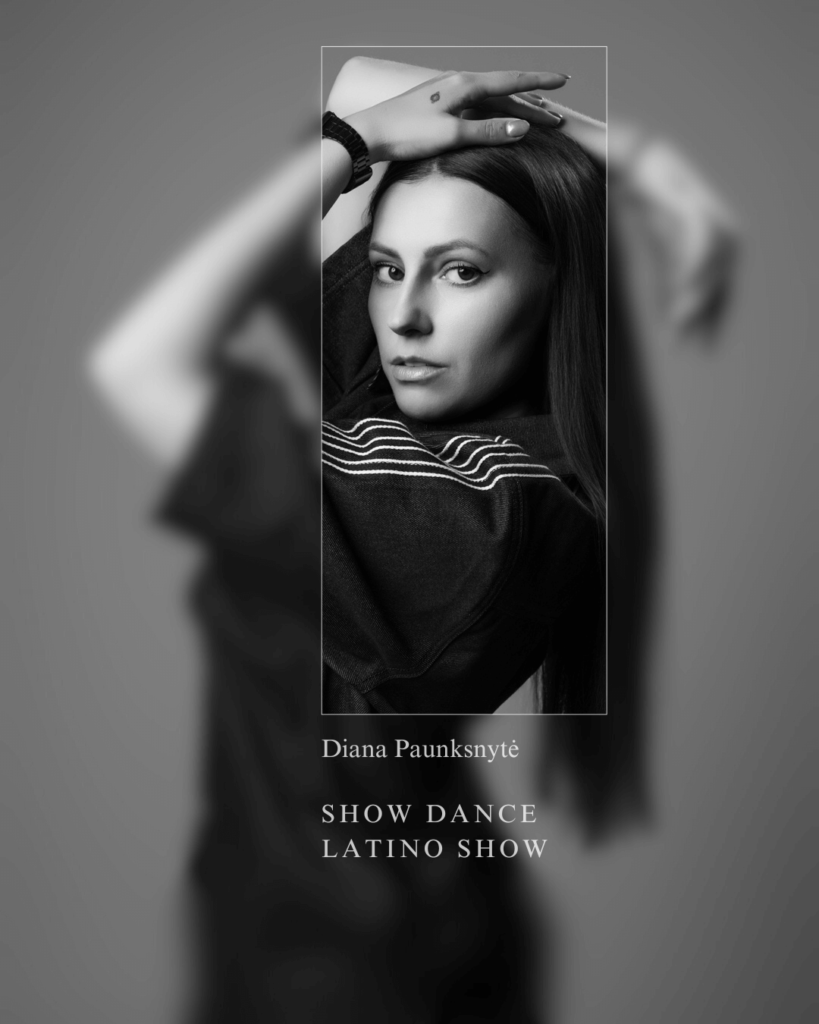
Teaches in: Vilnius
A qualified dance educator and methodologist with a master's degree in dance education; she choreographs TV and stage projects and works with show dance and PUELLA Latino Show groups.