In this article
- Your first class
- Origins and community
- Movement to notice
- Listen to the music
- Choosing a class
- Approaches and next steps
Discover your style
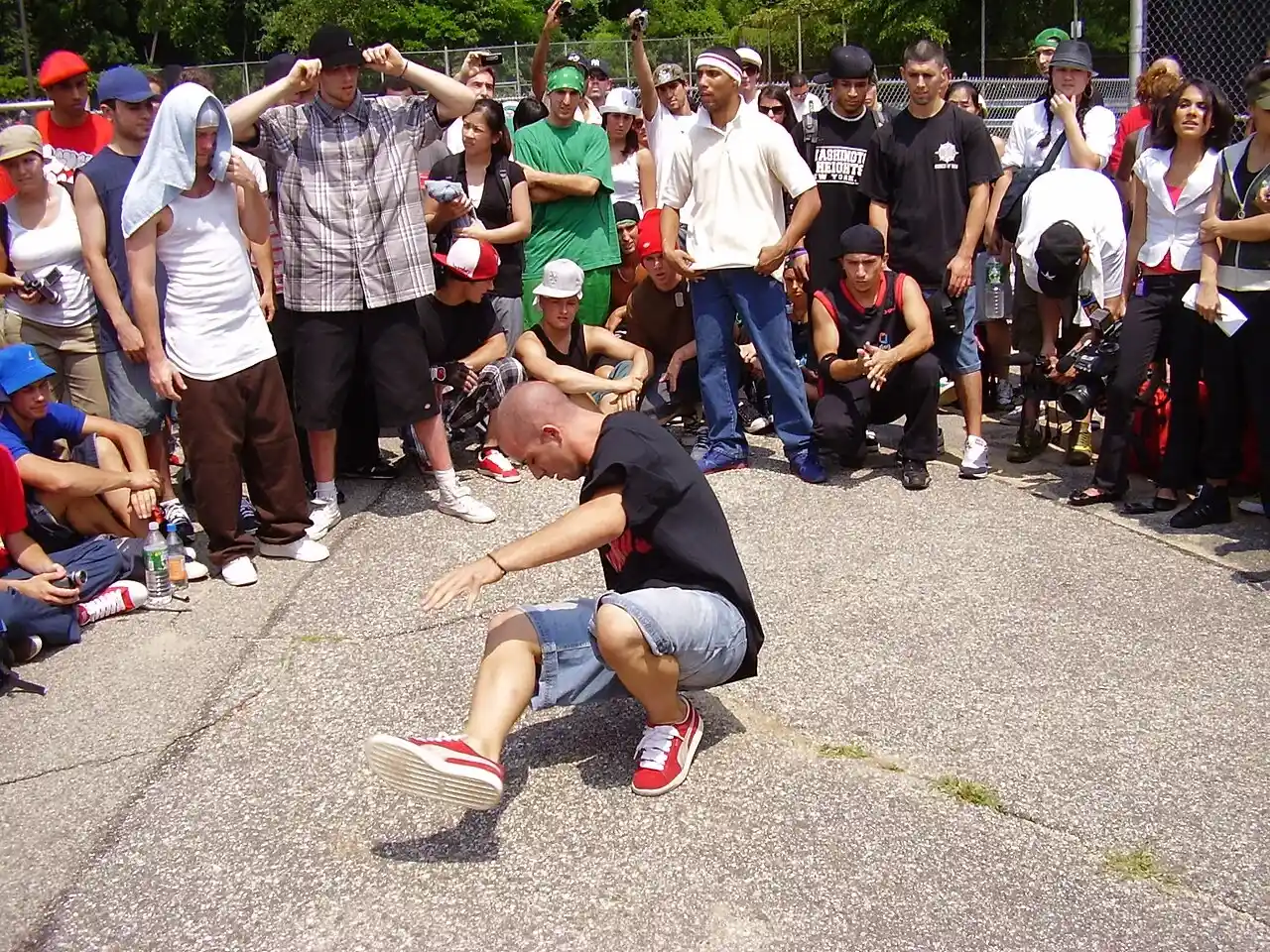
Street dance brings several communities and musical worlds into view. Find out which form your class teaches: breaking, house, locking and others have their own foundations.
01
At the start, ask for the name of one movement and the music it belongs to. Learn its rhythm slowly, then change its size or direction with the song's phrase. This gives the movement a purpose before you join it to a long sequence.
Find out whether the class spends most time on choreography, freestyle or the technique of one named form. Children's and adult groups may divide time differently between play, repetition and individual work. Choose by what you want to do after several lessons.
If the teacher opens a circle, watch the first few entries. Step in briefly, leave room for the next dancer and answer a sound you heard. One clear step is enough to begin a conversation with the music and the people.
02
The Smithsonian record for The Freshest Kids distinguishes breaking made by Black and Latino youth in New York from locking and popping developed by Black dancers in California. A catalogue may group them as street dance, while each has its own place and music.
Clubs, neighbourhood parties, television, travelling teachers and online video carried these forms onward. The Smithsonian hip-hop collection shows music, dance and visual culture travelling together. As you learn a named form, follow the names of its makers too.
A class may play funk, hip-hop or house. Listen as the bass pulse and pauses change; movement that fits one song may need another energy in the next. Ask why the teacher chose each track.
A circle, club and stage give different kinds of freedom. Dancers in a circle can answer one another, in a club they can explore a whole track, and on stage they can coordinate a group. Try more than one setting to find the community that draws you in.
03
Ask whether the class teaches locking, popping, house or another form: their body work differs.
Fabbreezy shows one street-dance freestyle approach in this Red Bull clip.
Red Bull Dance · FabbreezyOpen the original source ↗04
House, funk, and hip-hop music have different rhythms. Ask which sound leads this class’s movement.
05
06
Hip-Hop is a cultural field with a specific Bronx history and several practices. Street Dance is an even broader catalogue label that may include other club forms.
Teaches in: Kaunas
Teaches in: Kaunas
Teaches in: Kaunas
Teaches in: Kaunas
Teaches in: Kaunas
Teaches in: Kaunas