In this article
- What this class label means
- Movement to notice
- Listen to the music
- How to begin
- Similar dances you may like
- What to consider
Discover your style
Want Latin rhythms without finding a dance partner? Arrive on your own and learn with a group. In Solo Latino, discover how a song comes through your steps, hip movement and arm lines.
01
In a Solo Latino class, you learn steps on your own to different Caribbean and Latin American rhythms. A programme may include salsa, bachata or other dance steps.
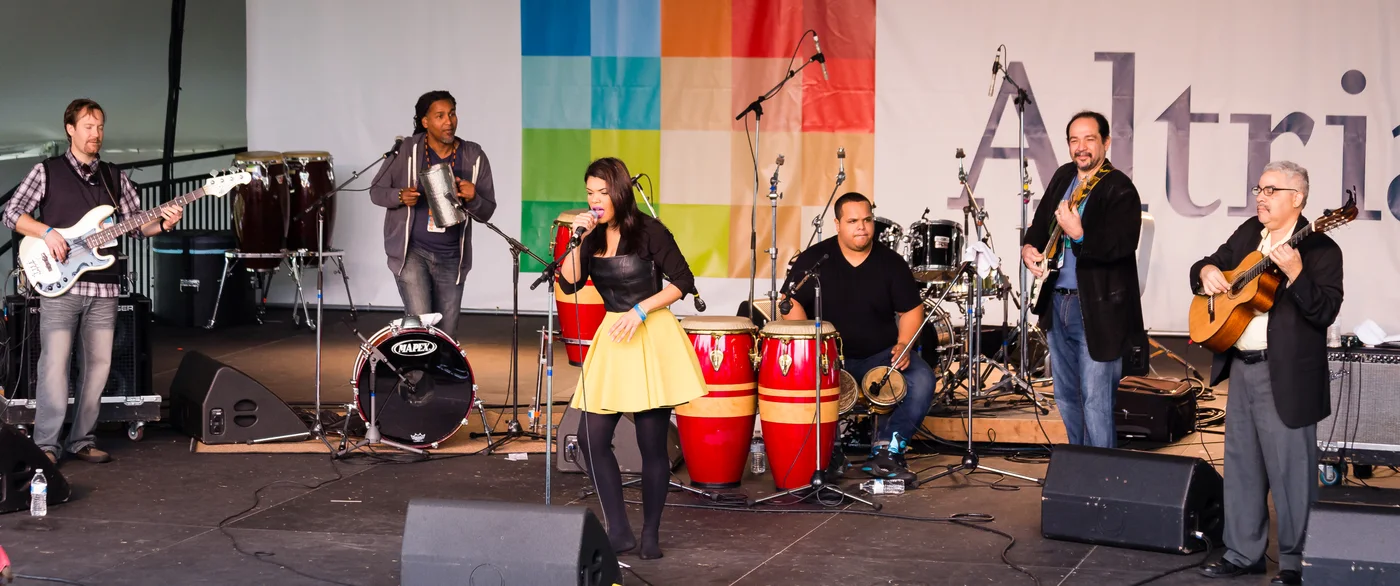
Solo Latino is a studio programme that draws music from distinct traditions. The UNESCO bachata entry describes music and dance from the Dominican Republic; the Smithsonian salsa exhibition follows another path shaped by migration. The rhythm used in a routine gives its movement context.
Solo Latino can be your first meeting with salsa or bachata. When the teacher names the dance, a favourite song becomes a route into its world: hear more of that music, try a dedicated class or visit a social night.
After learning one solo phrase, hear the song again at home. Where does it repeat, and where does an instrument or voice invite a new pause? At a social night, you can reduce the phrase to one step and leave space for other dancers.
02
The chosen rhythm changes where weight falls and how the pelvis moves; adapt the combination to each song.
In a solo class, you choose when to turn or step sideways. In a competitive Solo Latin performance, watch a dancer change direction while keeping the chosen dance rhythm.
Watch solo dancers keep Latin rhythm and stage direction at this WDSF event.
World DanceSport FederationOpen video ↗03
A solo phrase may use salsa percussion, bachata guitar or other music; foot timing should change with it.
04
A Solo Latino sequence makes more sense when you recognise the song's rhythm. You can then see why a step, hip movement or body accent lands at that point in the musical phrase.
One simple weight change lets you compare rhythms. Repeating it with another accent or direction shows how music changes the feel of a movement without a long routine.
Salsa percussion and bachata guitar and güira invite different accents in the same foot movement. A slow repetition helps you hear the difference before learning a longer routine.
A solo session may teach social-dance steps, a stage routine or active movement. The balance of technique, improvisation and filming differs between groups. Compare the class format with what you hope to do outside the studio.
05
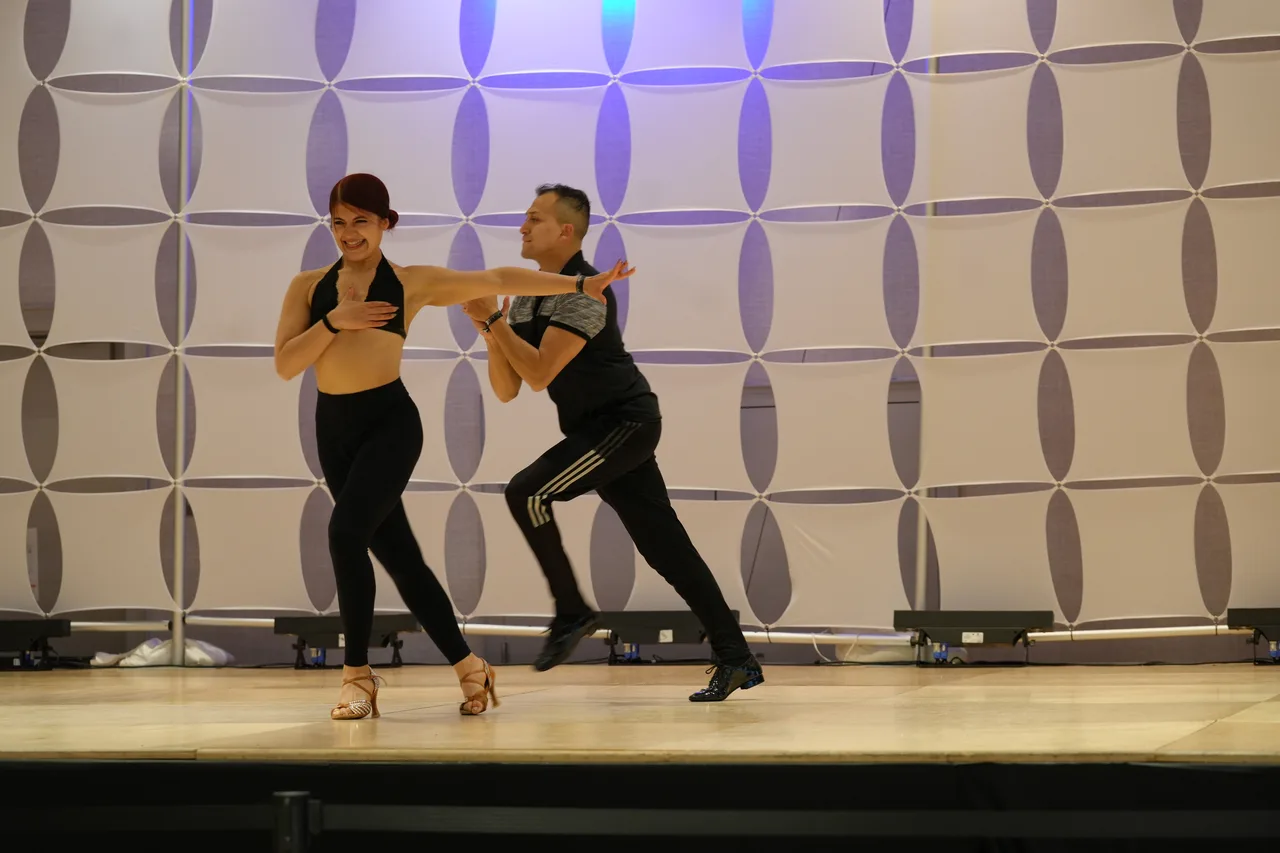
Solo practice lets you focus on your own movement. A partner class adds another conversation: feel a lead, respond to it and begin a turn together.
06
Teaches in: Klaipėda