In this article
- What makes this dance interesting
- Movement to notice
- Listen to the music
- How to begin
- Similar dances you may like
- What to consider
Discover your style
Locking moves like a joke with excellent punctuation: a fast sentence, a sudden lock, a point at the audience, and a broad smile built on precise technique.
01
The Campbell family’s account starts with a surprise: friends encouraged a Los Angeles art student to dance. While trying the Robot Shuffle, he found a stop that became his signature.
The Campbell family timeline dates Don Campbell’s creation of the Campbellock dance in Los Angeles to 1970. It later became known as locking, and the Lockers carried it to television and stage.
As you learn a point or lock, notice how the performer addresses another person: precise movement and playful exchange can work together.
Juste Debout shows an international stage. In a local circle, practise supporting other dancers and responding to an audience.
Watch how a dancer addresses an audience before and after a movement. Locking can use silence, a sudden stop or a playful reply to someone in the circle. Practise that exchange as deliberately as the arm technique.
02
A sharp stop works when free groove comes before it; keep the groove alive between poses.
In Tony GoGo’s performance, watch the contrast between loose groove and a sudden lock.
nekomon1Open the original source ↗In this judge demo, notice how a stop becomes a rhythmic idea.
TeamSKIPtvOpen video ↗The Go Go Brothers show how shared timing and individual character can coexist.
Jay_7o2Open video ↗03
A funk accent gives a sudden stop its point. Loose groove gives each lock energy.
04
Start with the point, pace, up lock, lock, and wrist roll. Keep the groove and combine a few foundations in fresh ways.
Record short attempts and seek a live community. A credible teacher corrects foundations, explains funk music, and stops humour from becoming a random collection of gestures.
Try one short phrase: move with the funk pulse, stop cleanly, point in a direction and return to the rhythm. Play the same track again and change only where you stop. The timing itself can carry the humour.
A teacher’s energy can inspire you, while patience with one lock may help you most. Compare how two teachers explain the change from movement into a lock. Look for words and a demonstration that help you hear the phrase’s accent.
05
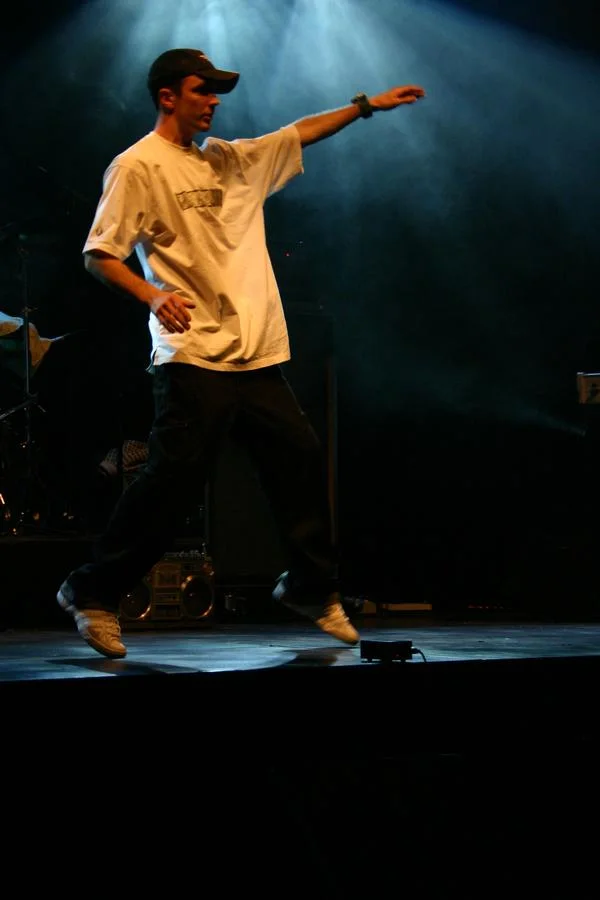
Locking stops broad movement in a clear pose and often addresses the audience. Popping uses brief muscular contractions, isolation, and illusion.
A Hip-Hop class may include many later groove and choreography practices. Locking is a specific Los Angeles funk tradition with names, music, and its own vocabulary.
06

Teaches in: Vilnius
Kristina Klioštoraitytė, known as FunkyKriss, is a street dance performer, choreographer and teacher. She graduated from LMTA in 2025.