In this article
- Your first class
- Origins and community
- Movement to notice
- Listen to the music
- Choosing a class
- Approaches and next steps
Discover your style
Breaking began when DJs extended the best part of a record and dancers answered with their bodies. Footwork, freezes, power, and battle culture grew from that musical opening.
01
A good start joins toprock, a safe way down, simple footwork, and a freeze. Strength matters, but technique must come before a risky trick.
A teacher should see different strength and mobility levels. If everyone is pushed into the same power move without wrist, shoulder, and fall safety, find another class.
Ask for a first round without a complex trick: enter with toprock, move into a short footwork phrase and hold a simple shape. See whether you can return to standing on the same beat. Later, watch how another dancer answers the pause you chose.
02
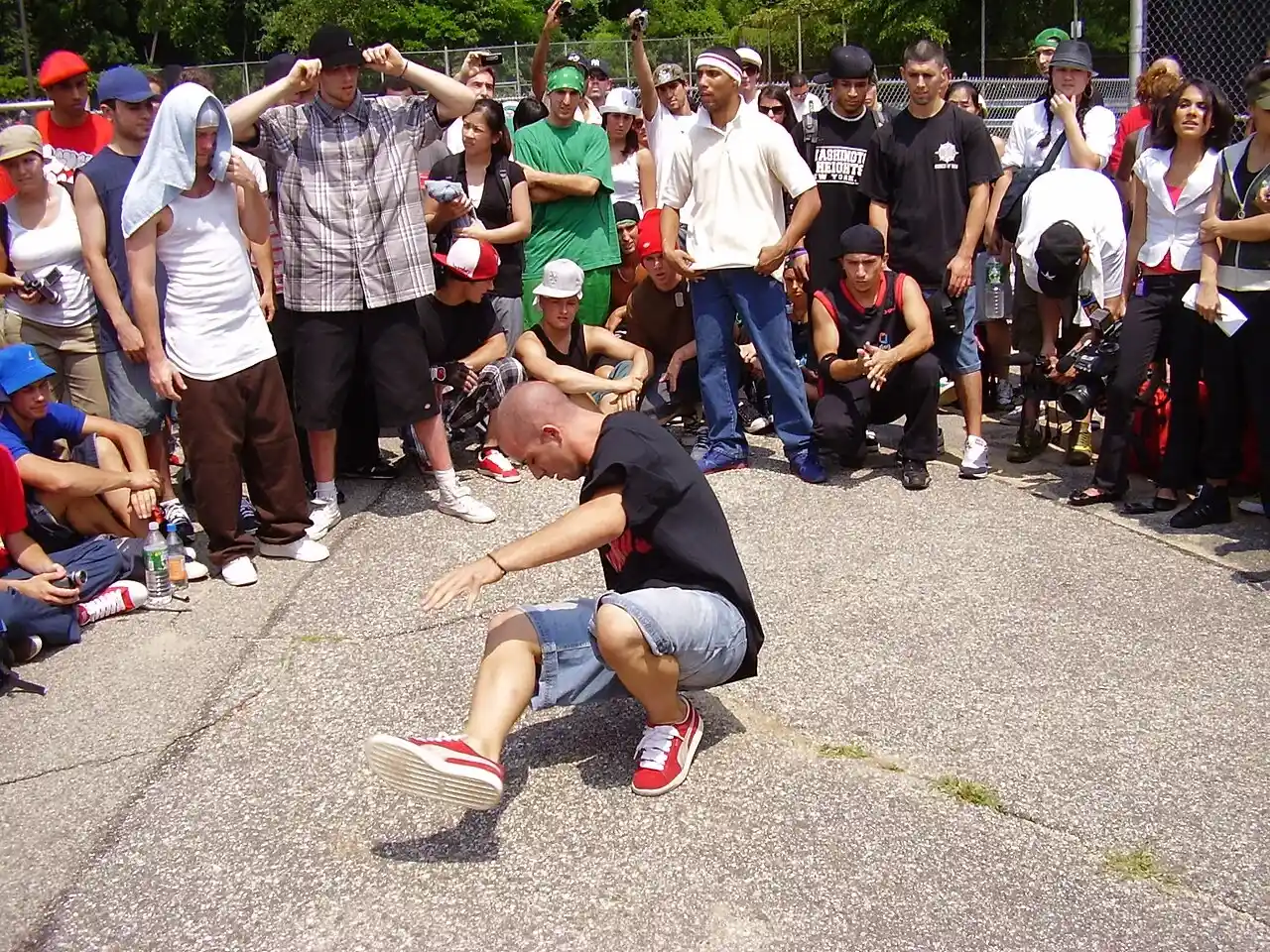
Breaking formed at 1970s Bronx parties among African-American and Latino youth. DJ Kool Herc extended drum breaks so dancers had more time to enter the circle.
Film and television carried the image worldwide but often reduced the story to ‘breakdance’. The community more often uses breaking, b-boy, and b-girl because those words retain the cultural connection.
The World DanceSport Federation names African American and Puerto Rican youth in the 1970s Bronx as early makers. Today's competition scene reaches around the world, while toprock, footwork, power and freezes still connect to circles built around musical breaks.
A cypher is part of the training. It teaches you to enter, claim space, answer the music, and leave room for the next dancer. A battle turns that logic into direct dialogue.
The Olympic stage increased breaking’s visibility. A crew, local cypher, DJ, and small battle may show more clearly how breaking is passed on.
Watch one cypher and one battle. In a cypher, the selected track and friends' replies can change a dancer's phrase; in competition, judges use defined criteria. The settings reveal different parts of breaking work: improvisation, invention, stamina and community.
03
Start with a standing step and rhythm, then descend safely; keep the music at the centre.
Watch how the dancer moves from standing steps to floorwork and returns to the music.
Red Bull BC OneOpen the original source ↗Compare two battle replies: who picks up the beat, and who changes the movement direction?
Red Bull BC OneOpen the original source ↗Watch the entrance to the circle, the pauses and the space left for the next dancer.
Red Bull BC OneOpen the original source ↗04
A breakbeat gives a dancer space to enter the cypher. Notice whether a move returns to a musical accent.
05
06
A catalogue Hip-Hop class often covers a wider groove or choreography field. Breaking has its own cypher, battle, floorwork, and breakbeat history.
Gymnastics can support strength and acrobatics, but breaking values musicality, originality, and battle choices. Practise tricks with the music.
Choosing a dance class for your child in Vilnius →
Teaches in: Vilnius
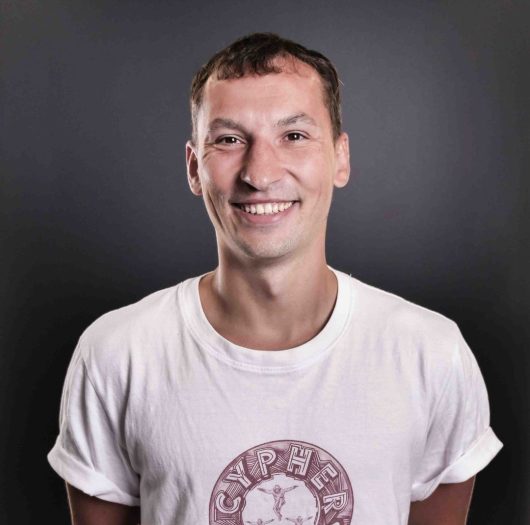
Denis, also known as B-boy Deni, has danced breaking since 2005 and taught since 2009. He is a member of the Uppercut team.

Teaches in: Vilnius
A 7 Mūzos teacher and LMTA graduate who has danced since 2005 and has stage and teaching experience.

Teaches in: Vilnius
Rokas Šaltenis, known as Rukus in breaking, is a Lithuanian breaking dancer and teacher. His work includes battles, dance theatre and seminars.

Teaches in: Vilnius
Mindaugas Radvila, known as Bboy M, is a breaking dancer and teacher. He has danced since 2005 and taught since 2017.