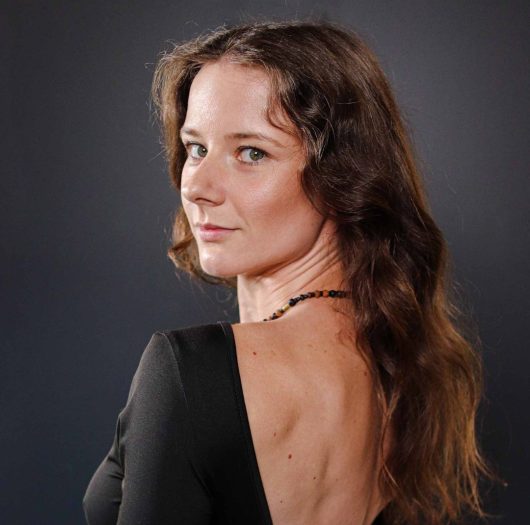
Angular arms, poses, and quick directions turn each beat into a clear statement.
Find studiosClass rules and availability come from each provider.
Reader guide
Getting to know Vogue
Learner voices
What people say helps them learn
A vogue beginner discussion treats online videos as a start, but links real progress to class and attending a ball because technique alone does not convey ballroom culture.
Start with a class or trusted teacher resources such as tutorials by Koppi Mizrahi or Gravity Jacobs.
Practise figure eights, catwalk, duckwalk, and hand lines briefly each day with a mirror or self-filming.
Flexibility and balance build gradually; ballet or hip-hop can help but do not replace vogue technique.
A ball is more than movement: it gives cultural and historical context that one tutorial cannot.
These links keep the page's evidence visible. Local class details describe access and teaching; they are not presented as global rankings or a single origin story.
9 sources
Local provider
SOK SOK — Dance styles
The catalogue describes local class aims such as story-led Show Dance, pop and music-video choreography, street basics, jazz/commercial training, feminine movement, vogue culture, hip-hop groove, contemporary floorwork, and high-heels confidence.
Boundary: Provider syllabus language; its short origin statements are not used as the site's sole cultural history.
Vogue — oral history of ballroom within mainstream culture
The visible article text records Black, brown, and queer ballroom roots, Harlem and Hamilton Lodge history, Crystal LaBeija and House structures, disputed voguing origin stories, Old Way/New Way/Vogue Femme, Willi Ninja, Leiomy Maldonado, mainstream crossings, and the need for community credit.
Boundary: The page became subscription-gated after the visible opening sections; only text and links that were actually readable were used.
The article describes Vogue Knights at Escuelita, ballroom's house/disco lineage, The Ha Dance and its crash/ha sample, Vjuan Allure and MikeQ, category-driven battle music, and named tracks including Love Is the Message, Bango, Dub Break, X, Cunty, and Din Daa Daa.
Boundary: A 2012 editorial interview/report; it preserves the writers' and producers' accounts and is not a universal track ranking.
The project frames ballroom as Black, Brown queer and trans joy and radical self-expression, calls New York City the birthplace while describing a global scene, documents houses as chosen kinship, and names Willi Ninja as an innovator and House of Ninja founder.
Boundary: A curated partner project and archive landing page; individual images carry their own credit and licence terms.
GMHC's official page gives the 22 August 2026 Terminal 5 date, a free 18+ community event, dance/voguing/fashion competitions, HIV and sexual-health messaging, more than 3,000 young attendees, Harlem roots, and houses as supportive surrogate-family structures.
Boundary: Current organiser information; attendance and heritage figures are attributed to GMHC and do not prove a global biggest-event ranking.
YouTube — Javier Ninja explains Vogue at Waackfest
The Funk'd Up TV page was opened and read: Javier Ninja of House of Ninja explains what Vogue is in a 6:28 Waackfest 2011 interview; the page displayed about 107,000 views.
Boundary: Interview and channel-hosted context, not a complete technique syllabus or ranking of teachers.
Paris Ballroom TV's 26:44 upload shows Vogue Fem (Male Figure) at the Unification Ball in La Villette, Paris, with Lasseindra Ninja and Jack Mizrahi named; the page displayed about 2.7 million views.
Boundary: Event-hosted showcase video and displayed view count are observation anchors, not proof of a global top ranking.
Ballroom Throwbacks Television's verified 15:17 upload was opened and read as a Vogue Femme category snapshot from the Latex Ball 2019; the page displayed about 6.1 million views.
Boundary: Archive channel showcase and displayed view count; the clip is not presented as representative of every ballroom category.
The file page identifies S Pakhrin as author, the October 2016 date, Flickr source, and a Creative Commons Attribution 2.0 licence permitting reuse with credit and licence link.
Boundary: Image reuse still requires the stated attribution and a link to the CC BY 2.0 licence; the photograph is a 2016 Washington, D.C. snapshot, not a history of all ballroom.
Vogue is recognised through hand performance, poses, catwalk, duckwalk, spins and dips, and floor performance. The Ha Dance crash and ‘ha’ are important musical markers, but ballroom DJs and producers also draw on house, disco, hip-hop, R&B, deep house, Baltimore, and Jersey club.
Live scene
The historical centre is Harlem and New York ballroom: Harlem balls, West Village clubs, Paradise Garage, Tracks, Sound Factory, and later Vogue Knights at Escuelita. Houses create chosen-family networks, while scenes now operate in Paris, other cities, and international House chapters.
Events
A reliable current anchor is GMHC's Latex Ball: the 2026 event was at Terminal 5 in New York, free to community members aged 18+, combined dance/voguing/fashion competitions with HIV and sexual-health messaging, and GMHC reports more than 3,000 young attendees. It is a major community event, not an objectively proven “biggest in the world.”
Geography
Google Arts & Culture calls New York the birthplace of ballroom, while GMHC places its heritage in Harlem and reports more than 20,000 community members in New York and thousands worldwide. The Paris Ballroom TV video from La Villette is one current international example; the sources do not provide a global city ranking.
Culture
Ballroom is not only a movement list or a generic ‘gay dance’. The sources emphasise Black, brown, queer, and trans joy, houses as chosen families, categories that historically helped people imagine safety and status, and the memory of the HIV/AIDS crisis. Learning should include community classes and balls, credit teachers and creators, and keep vogue connected to the people who built it.
Listening shelf
Five anchors, when the source supports them
The Ha DanceMasters at Work
Red Bull Music Academy calls it a 1991 classic whose crash and ‘ha’ became ballroom sound markers; a source anchor, not a universal number one.
The Vogue oral history connects her and Lottie LaBeija's House of LaBeija to resistance against racist judging and to the house as chosen-family structure.
Red Bull Music Academy reports that he and Luna Khan created Vogue Knights as a place for young voguers to hone their craft and experience ballroom energy.
Still missing: There is no independent global ranking of cities, teachers, tracks, or events; the five tracks and Latex Ball are presented as anchors from the sources read. The NMAAHC page requested verification, the NYPL URL redirected to a generic search, and the Rocky Mountain PBS episode URL returned 404; no claims rely on those leads. The rest of the Vogue article was subscription-gated, so only text and links that were directly readable were used. The photograph is CC BY 2.0: credit S Pakhrin, Wikimedia Commons, and link the licence. No reliable current global ranking was found: top fives and the “biggest” event are not presented as facts here.