Discover your style

Latin Show Dance

Latin Show Dance wants rhythm to reach the back row. It enlarges lines, character, and drama without losing the music it borrows from.

Find studiosClass rules and availability come from each provider.
Researched guideBy Noriu ŠoktiPublished 2026-10-01
In this article
  1. What might a first class feel like?
  2. Origins and class context
  3. See what to notice
  4. Hear the music change
  5. The teacher changes the dance
  6. One name, several ways to dance

01

What might a first class feel like?

A first class adds gaze, direction, and stage energy to the steps. Before making it bigger, the teacher should settle timing, weight, and safe group spacing.

For practice, list a few figures and connect them with basic steps; it is a simpler start than a long choreography.

Sources: Reddit r/DanceSport: Latin Dance Routine ↗

02

Origins and class context

This stage format may borrow from several Latin American and Caribbean dances. Its origin cannot be equated with the history of any one tradition it borrows.

Culture, not only steps

Story, music and costume can be rich, but a production should still credit the parent rhythm and communities instead of using ‘Latin’ as decoration.

Sources: Latin Ballet — dance history ↗

03

See what to notice

Stage direction

A turn and gaze should reach the audience while the feet still know the rhythm.

Sources: Latin Ballet — dance history ↗

04

Hear the music change

Stage music may change within one work. Notice whether movement accents follow each new rhythm.

Sources: Latin Ballet — dance history ↗

05

The teacher changes the dance

A brilliant performer is not always the teacher who helps you learn. Look for someone who can explain rhythm, notice confusion, adapt the pace, and make questions feel welcome.

Try more than one teacher before deciding that a dance is not for you. Sometimes the style is right and the room, pace, or teaching language is wrong.

Three useful questions

  • How do you keep the rhythm clear as stage movement gets larger?
  • Which particular dances and music does this performance use?
  • How much time goes to technique, correction, and filming, and can I learn without appearing on video?

06

One name, several ways to dance

Related optionLatino Choreo

Latin Choreography may remain a studio or video routine. Latin Show Dance adds stage drama, projection, costume, and a judged performance outcome.

Sources and scope

History and culture use the sources below. Local class facts come from the directory and can change independently.
Reader guide

Getting to know Latin Show Dance

Learner voices

What people say helps them learn

In a Latin show-dance and DanceSport routine discussion, beginners are advised to link a few clear figures with basic transitions, then test the stage result against musical phrases, directions, space, and the partners' level.

  • For practice, list a few figures and connect them with basic steps; it is a simpler start than a long choreography.
  • For the stage, sequence is not enough: consider visibility, dynamics, directions, and safe travel through space.
  • Musical phrasing is especially important in Samba, Jive, and Paso Doble; routine complexity should fit the dancers' level.
  • Commenters recommend a coach or private teacher, while self-assembled routines are fine when they keep the dancers engaged.

Reddit r/DanceSport: Latin Dance Routine ↗Community experience; a seven-month-old thread with four comments.

Sources behind this guide

Source notes

Readings that shape the page

These links keep the page's evidence visible. Local class details describe access and teaching; they are not presented as global rankings or a single origin story.

2 sources
Local provider

Žvaigždžių Takas — Solo Latino

The page names teacher Melisa and a solo performance syllabus using rumba, samba, cha-cha-cha, jive, bachata, and salsa, with confidence and camera comfort as aims.

Boundary: The long historical paragraphs are provider copy; independent cultural sources are required before reuse as history.

Editorial source

Latin Ballet — dance history

The history page connects Latin dance to Indigenous, European and African intersections. It describes Cuban rumba, Son and Danzón, Cuban bolero, Dominican merengue, tango in Buenos Aires and Latin Jazz in New York, naming source-specific listening and people anchors such as ‘Tristeza’, ‘Compadre Pedro Juan’, José ‘Pepe’ Sánchez, Luis Alberti, Carlos Gardel and Tito Puente.

Boundary: An editorial history page with strong cultural context and named examples; it is not a global popularity ranking or a complete syllabus for every Latin class label.

Watch examples

Examples linked from the reading

Žvaigždžių Takas — Solo Latino — observed video 1

Linked by the page we read; not a popularity ranking.

Žvaigždžių Takas — Solo LatinoOpen the original source ↗
Žvaigždžių Takas — Solo Latino — observed video 2

Linked by the page we read; not a popularity ranking.

Žvaigždžių Takas — Solo LatinoOpen the original source ↗
Žvaigždžių Takas — Solo Latino — observed video 3

Linked by the page we read; not a popularity ranking.

Žvaigždžių Takas — Solo LatinoOpen the original source ↗
Žvaigždžių Takas — Solo Latino — observed video 4

Linked by the page we read; not a popularity ranking.

Žvaigždžių Takas — Solo LatinoOpen the original source ↗
Latin Ballet — dance history — observed video 1

Linked by the page we read; not a popularity ranking.

Latin Ballet — dance historyOpen the original source ↗

The short version

A recognisable Latin rhythm is paired with formations, character, costume and a clear stage arc. The class label does not mean one historical style.

Live scene

Vilnius providers show Latin Show Dance alongside stage and ballroom-competition programming; the wider roots remain the relevant Latin parent scenes.

Events

Showcase competitions and federation stage categories are the relevant formats. The read pages do not support a single biggest Latin Show Dance event.

Geography

This is a stage format with Latin source material rather than a city-rooted folk tradition; Vilnius is a documented access example.

Culture

Story, music and costume can be rich, but a production should still credit the parent rhythm and communities instead of using ‘Latin’ as decoration.

Listening shelf

Five anchors, when the source supports them

  1. TristezaJosé ‘Pepe’ Sánchez

    A source-named Cuban bolero anchor from the Latin Ballet history page.

    Listen ↗
  2. Compadre Pedro JuanLuis Alberti

    A source-named Dominican merengue anchor from the same history page.

    Listen ↗
  3. La CumparsitaGerardo Matos Rodríguez

    A Río de la Plata tango anchor used here as one branch of a broad Latin listening shelf.

    Listen ↗
  4. ObsesiónAventura

    A widely heard bachata listening lead; the five-track shelf is not a Latin-dance ranking.

    Listen ↗
  5. Oye Como VaTito Puente

    A Latin-jazz and salsa listening lead for an umbrella label, not a universal canon.

    Listen ↗

People to know

Names with a source trail

No style-specific person was confirmed in the readable source set. Local teacher names stay in the source cards when the page supports them.

Watch

Shortlist of useful context

Žvaigždžių Takas — Solo Latino — observed clip 1

Linked by the page that was read; context example, not a popularity ranking.

Žvaigždžių Takas — Solo LatinoOpen the original source ↗
Žvaigždžių Takas — Solo Latino — observed clip 2

Linked by the page that was read; context example, not a popularity ranking.

Žvaigždžių Takas — Solo LatinoOpen the original source ↗
Žvaigždžių Takas — Solo Latino — observed clip 3

Linked by the page that was read; context example, not a popularity ranking.

Žvaigždžių Takas — Solo LatinoOpen the original source ↗
Sources and open questions

Checked 2026-09-18. Direct pages were read for the claims below. Search leads stay labelled.

Still missing: No reliable current global ranking was found: top fives and the “biggest” event are not presented as facts here.

Where to learn

Filter studios ↗

Teachers

Teaches in: Vilnius

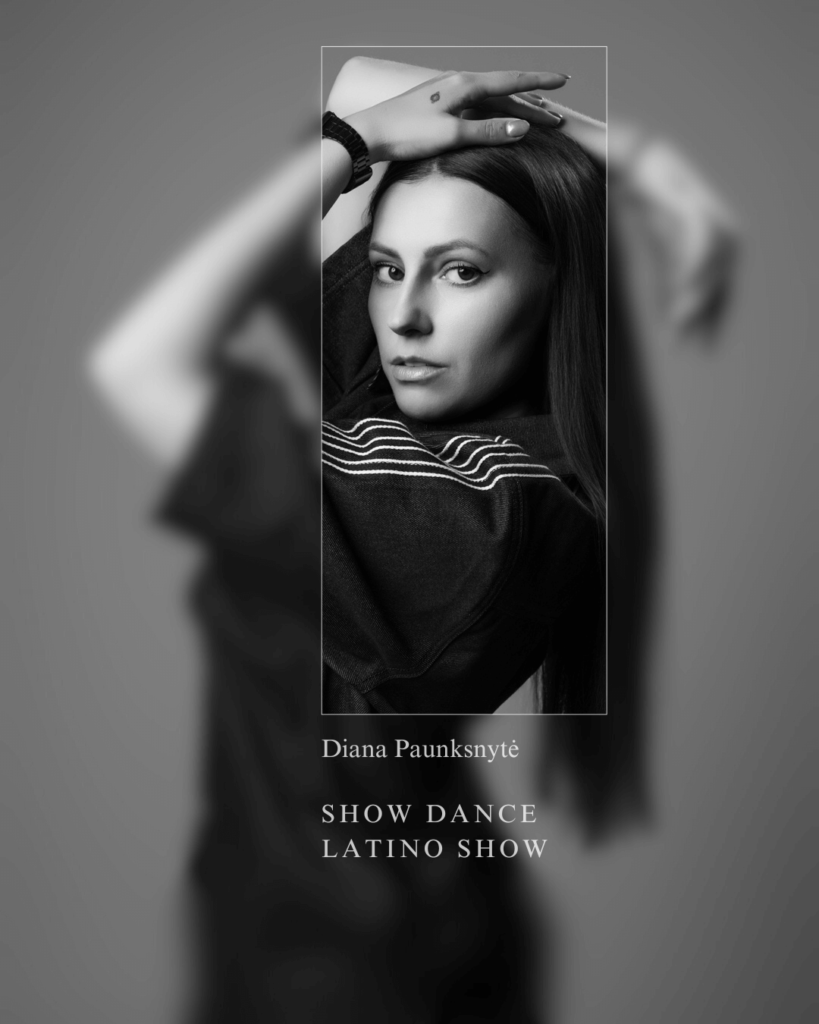
Diana Paunksnytė

A qualified dance educator and methodologist with a master's degree in dance education; she choreographs TV and stage projects and works with show dance and PUELLA Latino Show groups.

Ballroom DanceLatin Show Dance
Studios
View profile

A small sign. A lot of love.

Leave your mark

No account needed. Marks stay for up to 3 months.

How do marks work?

One mark per studio, for up to 10 studios every 24 hours. Each card keeps the 50 newest marks; a new one replaces the oldest. Each mark lasts up to 90 days. You can change yours every 10 seconds or remove it at any time. Changing it does not extend its expiry.

The most common reaction sets the color of the card's edge. These are visitor marks, not a studio rating.